Below the Line Marketing Strategies in India: Driving Real On-Ground Engagement for Brands
In India's crowded marketplace, television commercials and digital banner ads may create awareness, but they rarely close the sale. The real conversion happens at the retail shelf, inside the mall, or during a live product demonstration—moments where consumers can touch, experience, and decide. This is where below the line marketing strategies in India prove their worth.
Unlike above-the-line advertising that casts a wide net, BTL marketing focuses on direct engagement with defined target audiences. For brands operating across India's diverse retail landscape from modern trade formats in metropolitan cities to general trade outlets in tier-2 towns on-ground execution determines market success. When planned and executed correctly, BTL campaigns deliver measurable outcomes: footfall, trial, purchase, and long-term brand recall.
What Are Below the Line Marketing Strategies?
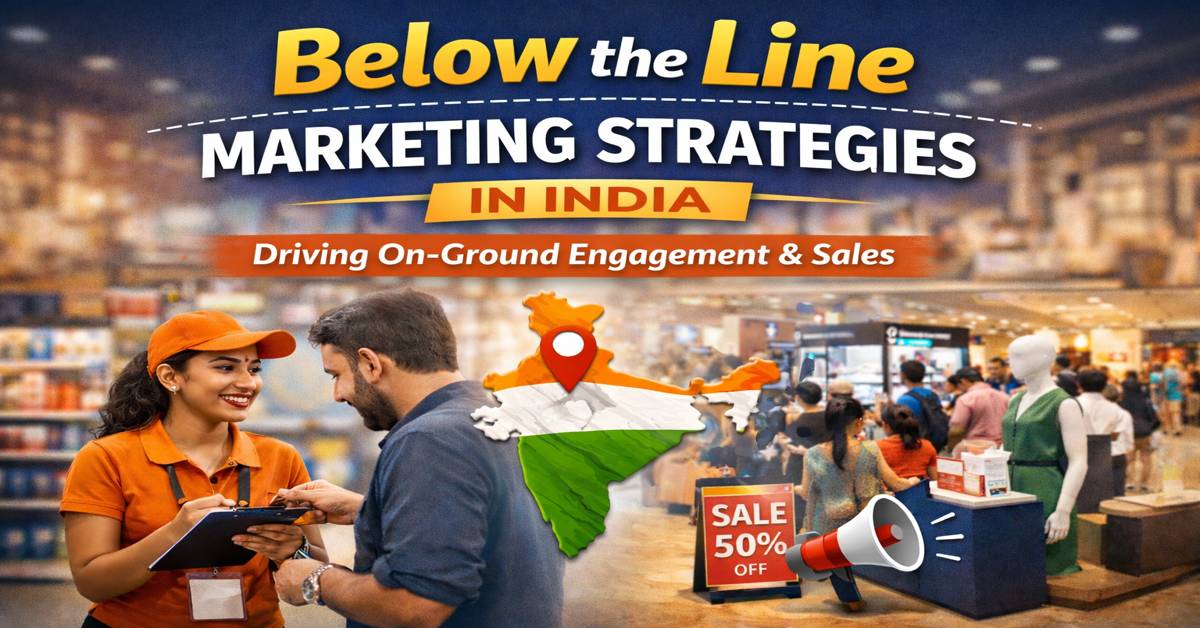
Below the line marketing refers to targeted promotional activities that create direct interaction between brands and consumers. These strategies operate outside mass media channels and instead focus on experiential engagement, point-of-purchase influence, and personalized communication.
The core objective is simple: reach consumers when they are closest to making a purchase decision. This includes in-store promotions, product sampling, mall activations, retail merchandising, corporate gifting, event sponsorships, and direct engagement campaigns.
In the Indian context, BTL becomes even more critical because purchase decisions are heavily influenced by in-store experiences, personal recommendations, and the ability to physically evaluate products before buying. Indian consumers across demographics still prefer to see, touch, and compare especially for categories like electronics, apparel, home appliances, FMCG, and personal care.
Why Below the Line Marketing Works in the Indian & Delhi Retail Market
India's retail environment is fragmented and complex. Modern trade coexists with traditional kirana stores. Consumer behavior varies dramatically between regions, languages, and income segments. What works in a premium mall in South Delhi may not work in a neighborhood market in East Delhi or a wholesale hub in Moti Nagar.
This complexity makes mass advertising less efficient. Brands need localized, flexible, and cost-effective strategies that can adapt to different retail formats and consumer mindsets. Below the line marketing strategies in Delhi and other major cities address this need by enabling brands to:
Control the narrative at the point of sale. Retail is where final decisions happen. A well-designed POSM unit, an engaging product demo, or an attractive shelf display can shift preference in seconds.
Build trust through direct interaction. Indian consumers value human connection. A trained brand ambassador explaining product benefits face-to-face creates more impact than a dozen digital impressions.
Achieve geographic precision. BTL allows brands to concentrate efforts in high-potential areas—specific malls, retail clusters, or catchment zones—without wasting resources on broad-stroke campaigns.
Respond quickly to competition. On-ground teams can observe competitor activity in real time and adjust tactics immediately, something that's impossible with pre-booked media plans.
Maximize ROI in cluttered markets. With hundreds of brands competing for attention, visibility at the retail level often delivers better returns than expensive ATL spends.
Delhi, as a commercial hub with a mature retail infrastructure and high consumer spending power, represents both opportunity and challenge. The city's retail landscape includes premium malls, high-street stores, hypermarkets, and dense local markets. Brands operating here need BTL strategies that can work seamlessly across these formats while maintaining consistency in messaging and execution quality.
Most Effective Below the Line Marketing Strategies in India
Brand activations inside retail environments create immersive experiences that go beyond traditional advertising. These campaigns transform passive shoppers into active participants.
Common formats include product demonstration zones, interactive kiosks, trial counters, and experiential setups. For example, a home appliances brand might set up a live cooking demonstration in a hypermarket, allowing shoppers to see the product in action and ask questions directly. A skincare brand could offer free skin analysis and personalized consultations at a beauty retail outlet.
The key to success lies in seamless integration with the retail environment. Activations should enhance the shopping experience, not disrupt it. Trained personnel, quality setup materials, and clear communication are non-negotiable.
POSM and Retail Visibility
Point-of-sale materials remain one of the most cost-effective tools for influencing purchase decisions. In India's competitive retail space, shelf visibility often determines which brand gets picked.
Effective POSM includes shelf talkers, wobblers, danglers, counter displays, standees, window graphics, and branded fixtures. These materials serve multiple purposes: they highlight promotional offers, communicate product benefits, guide shoppers to the right shelf, and reinforce brand identity.
The challenge is maintaining quality and consistency across hundreds or thousands of retail touchpoints. Materials must be durable enough to withstand India's varying climatic conditions and high-traffic retail environments. Design should be simple, bold, and culturally relevant.
Mall Promotions and Sampling
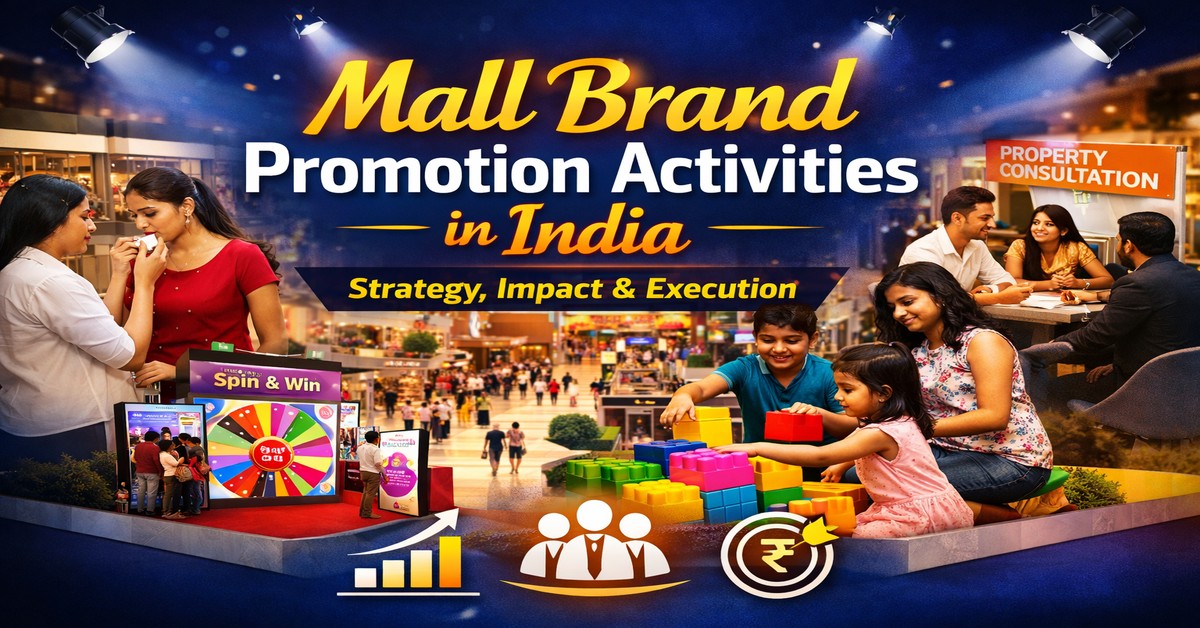
Shopping malls continue to be high-footfall zones where brands can reach aspirational consumers in a receptive mindset. Mall activations range from product sampling kiosks to pop-up stores, fashion shows, gaming zones, and celebrity appearances.
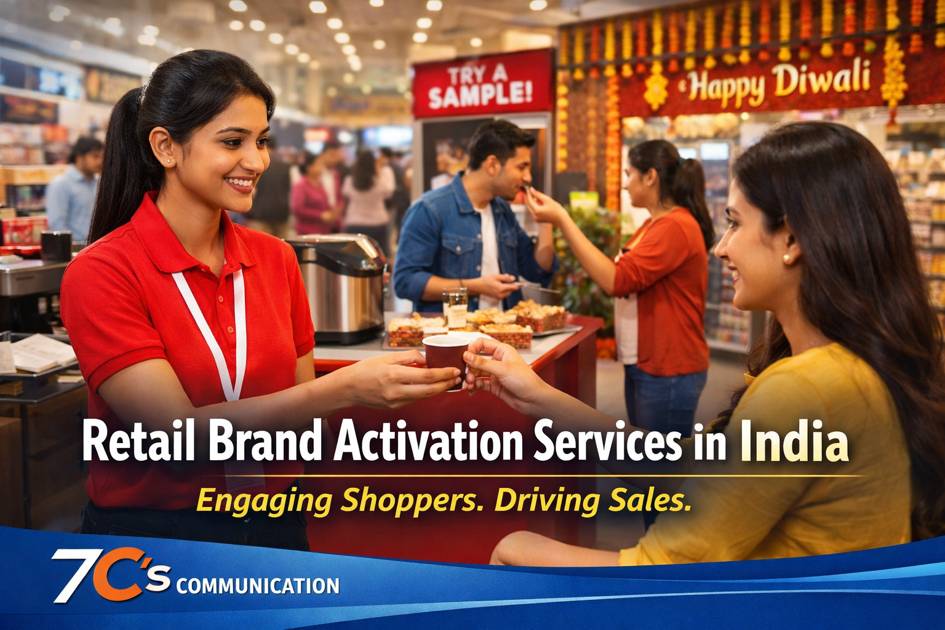
Sampling works particularly well for FMCG and food & beverage brands looking to drive trial. When executed properly with the right location, engaging staff, and hygiene standards,sampling campaigns can convert a significant percentage of participants into buyers.
Timing and placement are critical. Weekend footfall in malls is higher, but also more rushed. Activations near anchor stores, food courts, or main atriums capture maximum attention. Permits, mall management coordination, and adherence to operational guidelines require experienced execution teams.
Corporate and Institutional Activations
B2B brands and corporate-focused products benefit from targeted activations in office complexes, IT parks, educational institutions, and residential societies. These environments allow brands to reach specific demographics with tailored messaging.
Examples include health checkup camps in corporate offices, product demos in co-working spaces, or residential society activations for home services, fintech products, or e-commerce platforms. The controlled environment and captive audience make these campaigns highly efficient.
Executing Below the Line Marketing Strategies in Delhi and Across India
Successful BTL execution requires more than creative ideas. It demands operational rigor, local market knowledge, and the ability to manage multiple moving parts simultaneously.
Planning begins with clear objectives. What is the campaign trying to achieve? Brand awareness? Product trial? Lead generation? Immediate sales? Each goal requires different tactics, metrics, and resource allocation. Market research, competitive analysis, and retail landscape mapping inform campaign design.
Design must balance creativity with feasibility. Concepts that look impressive on paper often fail during execution due to logistical constraints, regulatory hurdles, or cultural mismatches. Materials must be designed keeping production timelines, transportation realities, and on-ground assembly requirements in mind.
Execution quality determines campaign success. Even the best strategy fails if the on-ground team is poorly trained, materials arrive late, or setups look shoddy. Brands need execution partners who can manage end-to-end logistics—material production, transportation, installation, personnel deployment, real-time monitoring, and post-campaign dismantling.
Pan-India consistency is challenging but essential. A brand's activation in Mumbai should maintain the same quality standards as its campaign in Jaipur or Kolkata. This requires standardized processes, centralized quality control, and local teams who understand regional nuances without compromising brand guidelines.
At 7C's Communication, with over 16 years of on-ground execution experience, we have managed BTL campaigns across India's diverse retail landscape. Our presence in Delhi, operating from Moti Nagar, gives us deep understanding of the capital's retail dynamics while our pan-India network enables consistent campaign delivery in metros, tier-1, and tier-2 cities.
We have seen firsthand how execution quality impacts campaign outcomes. A well-trained brand ambassador can single-handedly elevate a campaign's effectiveness. A poorly installed POSM unit can damage brand perception. The difference between average and exceptional BTL results often comes down to operational excellence.
How 7C's Communication Delivers Successful BTL Campaigns
Our approach is built on four pillars that have remained consistent across hundreds of campaigns and thousands of retail touchpoints:
Strategic Planning. We begin every campaign with thorough groundwork—understanding brand objectives, studying target consumers, analyzing retail landscapes, and identifying execution challenges. This prevents costly mid-campaign corrections and ensures resource efficiency.
Design for Impact. Our design team balances creative appeal with production practicality. We prototype materials, test them in actual retail conditions, and refine based on real-world feedback. Cultural sensitivity, regional language preferences, and local aesthetic sensibilities are built into every design.
Flawless Execution. Our operational strength lies in managing complexity. We handle material sourcing, vendor coordination, logistics, installation, personnel training, and daily monitoring. Our teams understand that execution quality is non-negotiable—whether the campaign is in a premium South Delhi mall or a local market in tier-2 town.
Consistency at Scale. Maintaining brand consistency across multiple cities and formats is difficult but essential. We use standardized processes, regular audits, real-time reporting, and continuous team training to ensure every touchpoint meets defined quality standards.
How to Choose the Right BTL Marketing Agency in Delhi
Brands evaluating BTL partners should look beyond portfolio presentations and focus on operational capabilities.
Experience matters, but relevant experience matters more. An agency with 20 years in event management may not understand retail branding nuances. Look for agencies with proven track records in your specific category—retail, FMCG, consumer durables, or B2B.
Operational infrastructure is critical. Ask about their supply chain management, vendor networks, material storage facilities, and field team structure. Can they handle pan-India execution? Do they have quality control mechanisms? How do they manage last-mile logistics?
Cultural and market understanding separates good from great. India is not a homogeneous market. An agency that understands regional differences, language preferences, and local retail ecosystems will deliver more effective campaigns.
Transparency and accountability should be standard. Insist on clear reporting, regular updates, and measurable metrics. Avoid agencies that promise unrealistic outcomes or operate without documented processes.
Common mistakes include choosing agencies based solely on cost, failing to verify past execution quality, and underestimating the complexity of multi-city campaigns. Cheap execution often results in poor outcomes that damage brand reputation far more than the money saved.
Conclusion
Below the line marketing strategies in India continue to deliver tangible results for brands willing to invest in quality execution. While digital channels dominate marketing conversations, on-ground engagement remains irreplaceable for categories where touch, trial, and personal interaction drive purchase decisions.
The Indian retail landscape rewards brands that understand local markets, maintain operational excellence, and execute consistently across diverse geographies. BTL is not about sporadic activations or opportunistic promotions—it is about building a sustained presence at the point of purchase, creating memorable brand experiences, and converting awareness into sales.
For brands looking to strengthen their retail presence, drive trial, or establish deeper consumer connections, partnering with experienced execution specialists makes the difference between campaigns that create noise and campaigns that create impact.