Why Your Brand Needs an Experiential Marketing Agency in India to Create Lasting Customer Connections
Scroll through your phone right now. How many ads did you ignore in the last five minutes? Probably dozens—maybe more. Indian consumers have developed sophisticated filtering systems, mentally blocking billboards, skipping YouTube pre-rolls, dismissing banner ads without conscious thought.
An experiential marketing agency in India helps brands overcome advertising fatigue by creating real-world interactions that customers actively engage with, remember, and share—turning attention into participation and participation into long-term brand connection.
Here's where experiential marketing breaks through that immunity differently. Instead of interrupting people, these specialists create moments people actively seek out, participate in, photograph, and share with friends. This shift from passive viewing to active participation? It changes everything about how customers relate to your brand.
What an Experiential Marketing Agency in India Actually Does in Practice
Picture traditional advertising: your brand talks, customers listen (maybe). Now picture experiential marketing: customers touch your products, taste your samples, play your games, create content with your installations, and walk away with genuine memories tied to positive emotions.
An experiential marketing agency in India orchestrates these physical interactions at scale. They don't just rent booth space and hire attractive staff—they engineer experiences that align with brand strategy, appeal to specific demographics, and generate measurable business outcomes beyond feel-good moments.
The methodology combines psychology, logistics, technology, and creativity—understanding what motivates your target audience to stop scrolling and start participating. Coordinating dozens of moving pieces—permits, vendors, staff, inventory—without visible hiccups. Then there's integrating digital elements that amplify physical experiences across social platforms. Measuring everything to prove ROI rather than claiming vague "brand awareness" benefits.
Why Traditional Advertising Keeps Losing Ground in India
Consumer attention spans haven't actually shortened—they've just gotten selective. People will watch 45-minute YouTube videos about topics they care about but skip 15-second ads about products they don't. The issue isn't attention; it's relevance and engagement.
Trust in advertising has eroded significantly. When everyone claims "best quality" and "lowest prices," these promises become meaningless noise. Customers trust experiences over claims. Trying your product personally beats any advertising promise, and sharing that experience with their network provides social proof that paid endorsements cannot match.
The social media multiplier effect changes marketing mathematics entirely. Traditional advertising reaches whoever sees the ad, period. Experiential marketing reaches participants plus everyone in their networks who see shared content. One person experiencing your brand activation might generate impressions across 500 social connections organically—and that's conservative math in today's hyper-connected landscape.
India's unique festival culture creates concentrated opportunities. Diwali shopping surges, Durga Puja celebrations, Ganesh Chaturthi gatherings, regional harvest festivals—these events bring millions together in celebratory moods receptive to brand messages delivered experientially rather than advertised intrusively.
Ten Ways Brands Create Memorable Experiential Marketing Campaigns
Pop-Up Retail Installations That Generate Queues
Temporary stores in unexpected locations create urgency through scarcity. When you're only open for three days in Select Citywalk or just weekends in Phoenix Marketcity, customers prioritize visiting before the opportunity disappears. Limited-edition products, exclusive experiences, or celebrity appearances amplify this appeal. I've seen pop-ups generate four-hour queues simply because of the "get it before it's gone" psychology.
Mall Activation Zones That Stop Foot Traffic
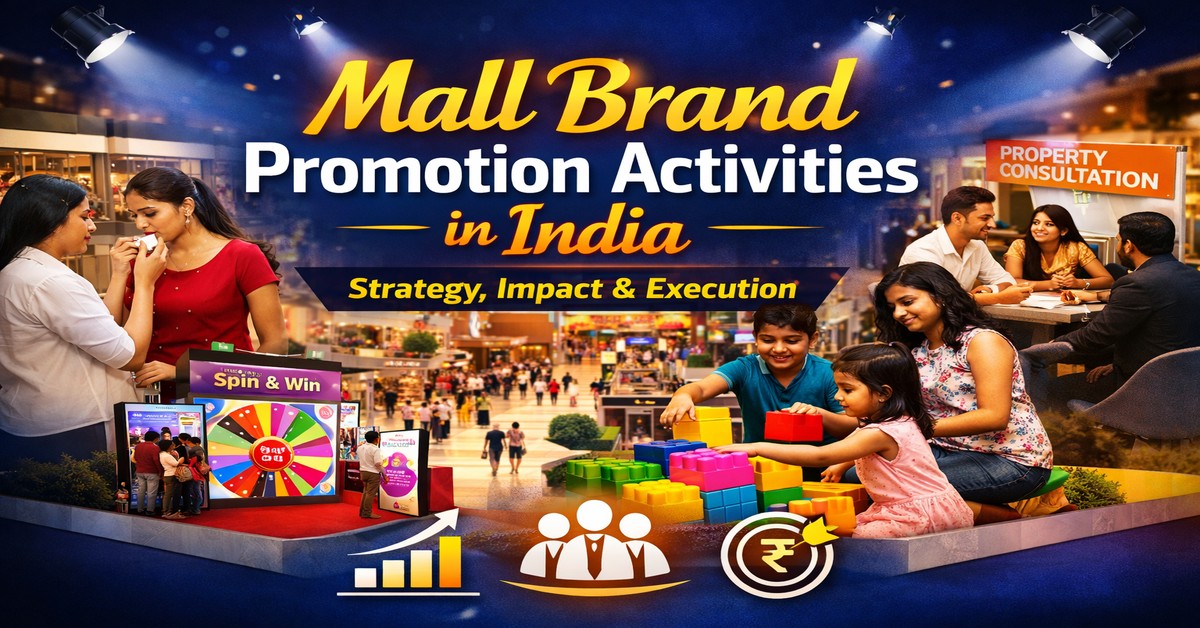
Strategic booth placement at mall intersections captures shoppers between stores. Interactive elements—games winning prizes, photo opportunities with props, product demonstrations with humor—transform passive walking into active engagement. Weekends during festival seasons maximize concentrated reach.
Music Festival Sponsorships With Branded Experiences
Sunburn Goa attracts 350,000 attendees across four days. NH7 Weekender brings music lovers to multiple cities. These festivals offer captive audiences in excellent moods—and I mean truly receptive. Creating lounges, photo installations, or interactive zones within festival grounds associates brands with positive memories from amazing experiences. The ROI on festival activations, when done right, often surprises even seasoned marketers.
Augmented Reality Experiences That Merge Physical and Digital
AR filters letting customers virtually try products, games overlaying digital content on physical spaces, or interactive walls responding to movement—technology creates shareability while demonstrating innovation. Tech-savvy urban audiences especially appreciate these sophisticated touchpoints.
Flash Mob Performances That Go Viral Organically
Choreographed surprises in public spaces—railway stations, shopping streets, metro stations—capture attention through unexpected entertainment. When executed well, bystanders film and share videos, generating millions of organic views without paid promotion.
Sampling Campaigns That Convert Skeptics Through Trial
Nothing convinces better than experiencing product quality firsthand. Strategic sampling at high-traffic locations—airports, office complexes, residential societies—reaches target demographics when receptive. Following up collected data with digital retargeting completes conversion funnels.
Corporate Event Activations Reaching Business Audiences
Trade shows, industry conferences, and business parks offer concentrated professional audiences. Interactive demonstrations showcasing B2B solutions, networking lounges facilitating connections, or expert presentations positioning thought leadership work differently than consumer campaigns but equally effectively.
Street Art Installations Becoming Destination Attractions
Large-scale murals or sculptures incorporating brand elements transform locations into Instagram destinations. Visitors travel specifically to photograph these installations, organically spreading brand visibility across social networks through user-generated content.
Experiential Retail Theater Inside Stores
Cooking demonstrations in supermarkets, styling sessions in clothing stores, tech workshops in electronics showrooms—transforming retail spaces into entertainment venues increases dwell time while demonstrating product applications naturally.
Cultural Festival Integration Showing Brand Sensitivity
Rangoli competitions during Diwali, traditional music during Durga Puja, harvest celebrations during Pongal—brands participating authentically in cultural moments build deeper connections than generic campaigns ignoring regional significance.
The Strategic Process Behind Successful Experiential Campaigns
Effective campaigns start by defining success metrics clearly. Are you launching a product requiring awareness? Repositioning a brand needing perception shifts? Driving immediate sales through promotions? Different objectives demand different approaches, and clarity prevents designing activities that feel good but achieve nothing measurable.
Audience profiling goes beyond demographics into psychographics. What do target customers care about passionately? What frustrates them? What makes them laugh? What causes them to photograph and share? These insights inform experience design that resonates emotionally rather than just captures attention momentarily.
Location scouting considers far more than foot traffic numbers. Does the audience mix match your targets? Do surrounding retailers complement or contradict your brand positioning? Can logistics handle your requirements? Do local regulations permit your planned activities? The perfect location balances reach with relevance.
Experience design walks the line between impressive and accessible. Overly complex activities requiring lengthy explanations deter casual participants—you'll watch people literally walk past if they can't grasp it in five seconds. Simplicity that delivers instant gratification—win a prize immediately, see your photo with effects instantly, understand the game within seconds—maximizes participation rates. Always.
Staff selection and training determines execution quality ultimately. Enthusiastic, knowledgeable teams create positive impressions. Bored, uninformed staff actively damage brands regardless of creative brilliance. At 7C'S Communication, we invest heavily in comprehensive training programs ensuring every brand ambassador embodies client values consistently—because we've learned the hard way that no amount of creative genius can compensate for poor frontline execution.
Technology integration serves strategy rather than existing for novelty. Tablets capturing customer data, social media walls displaying live feeds, digital games tracking scores—each element should serve clear purposes like data collection, amplification, or engagement deepening.
This is where experiential marketing moves beyond creativity and begins delivering real, measurable business value.
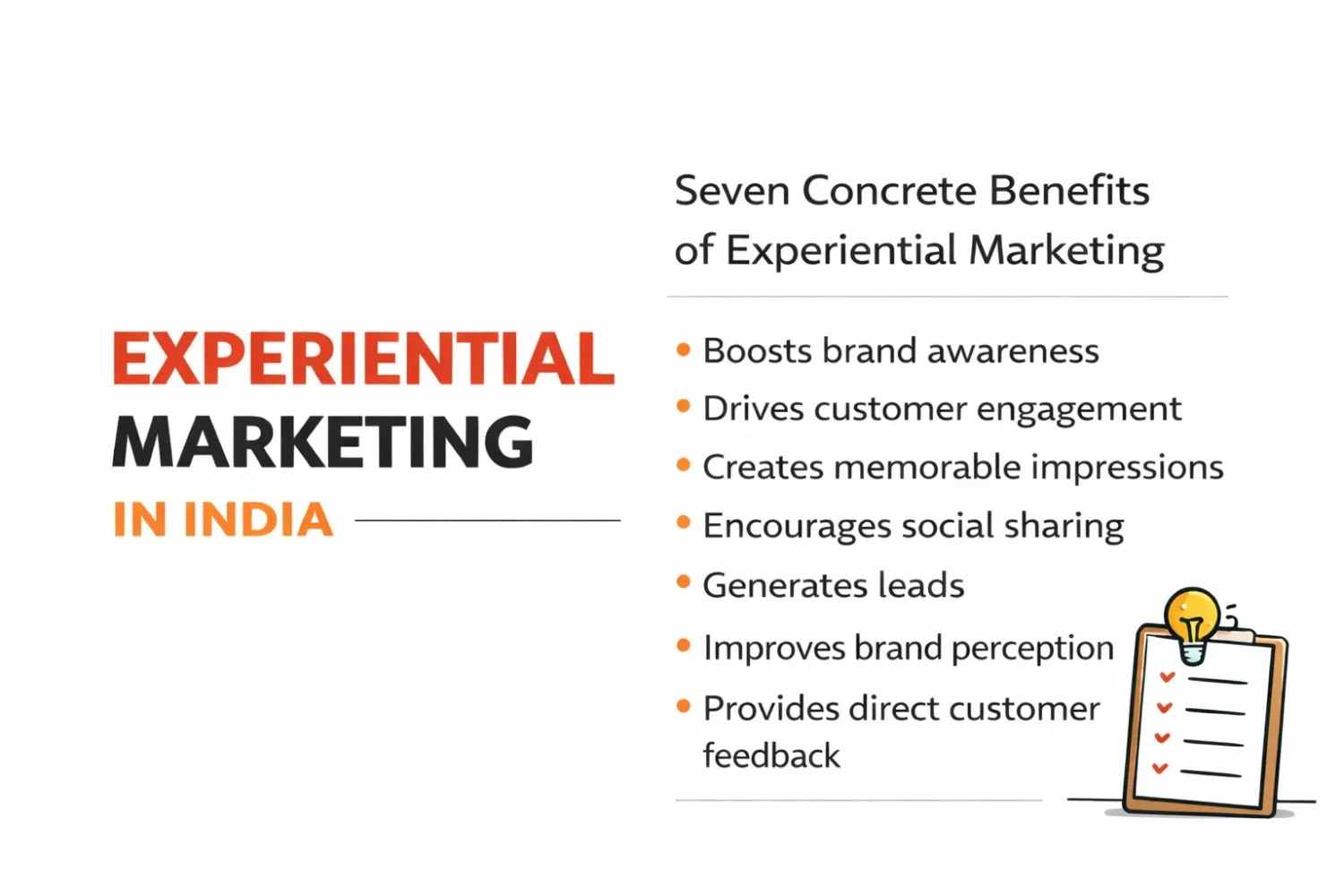
Seven Concrete Benefits of Experiential Marketing
Experiential marketing helps brands move beyond traditional advertising by creating meaningful, real-world interactions with consumers. In the Indian market, where customers value authenticity and engagement, experiential campaigns deliver measurable impact across multiple touchpoints.
The key benefits of experiential marketing include:
- Boosts brand awareness by increasing real-world visibility and recall
- Drives customer engagement through interactive, hands-on experiences
- Creates memorable impressions that stay with audiences long after the campaign
- Encourages social sharing, extending reach organically across digital platforms
- Generates leads from audiences who actively choose to engage
- Improves brand perception by building trust and emotional connection
- Provides direct customer feedback through live interactions and responses
These benefits make experiential marketing one of the most effective strategies for brands looking to build stronger customer relationships and long-term loyalty in India’s competitive marketplace.
Six Costly Mistakes That Sabotage Experiential Marketing Campaigns
Choosing Locations Based on Cost Rather Than Audience Fit
Cheap venue rental in low-traffic areas wastes money completely. High-visibility premium locations with wrong demographics look impressive in photos but generate zero business impact. I've seen brands blow ₹10 lakhs on a gorgeous setup in the wrong mall—beautiful Instagram content, zero conversions. In one mall activation in Delhi NCR, we learned this the hard way—great design alone doesn't guarantee engagement if execution misses the audience. Strategic site selection prioritizes target audience concentration over affordability or aesthetics.
Designing Experiences That Please Executives Instead of Customers
What impresses board members often bores actual customers. Sophisticated concepts requiring explanation fail versus simple activities delivering immediate fun. Test ideas with real target audiences rather than assuming executive preferences represent market tastes.
Neglecting Social Media Integration From Design Phase
Adding "please share on Instagram" as afterthought misses opportunities. Experiences designed for shareability—Instagram-worthy backdrops, video-worthy activities, hashtag-worthy moments—generate organic amplification naturally. Design with cameras in mind from concept stage.
Underestimating Importance of Staff Quality
Hiring based on appearance over personality creates beautiful but ineffective teams. Enthusiasm, product knowledge, customer service instincts, and brand alignment matter infinitely more than conventional attractiveness. Poor staff execution undermines creative brilliance instantly.
Failing to Capture and Utilize Participant Data
Engaging hundreds of customers without collecting information wastes relationship-building opportunities. Simple mechanisms—digital sign-ups, business card drops, QR code scans—build databases enabling ongoing nurturing through email, retargeting, and personalized offers.
Measuring Only Participation Without Tracking Business Outcomes
"5,000 people visited our booth" means nothing without connecting participation to awareness lifts, purchase intent changes, or actual sales. Comprehensive measurement links experiential activities to business KPIs, justifying continued investment and informing optimization.
Strategic Timing: When Experiential Marketing Makes the Most Sense
Product Launches Needing Demonstration
Revolutionary products requiring hands-on trial to appreciate benefits—new technologies, innovative food items, unique service models—convert skeptics through experiential sampling far more effectively than describing features through advertisements.
Market Entry Into New Geographic Regions
Establishing presence in unfamiliar markets demands visibility and trial generation. Concentrated experiential campaigns create awareness quickly while demonstrating products locally, overcoming the handicap of being new and unknown.
Competitive Scenarios Requiring Differentiation
When price wars and feature parity commoditize categories, experiential marketing establishes emotional differentiation. Creating memorable experiences justifies premiums even when rational product differences disappear.
Festival Seasons Concentrating Shopping Behavior
Diwali, Christmas, Durga Puja, regional celebrations—festivals compress months of shopping into weeks. Brands maximizing experiential presence during these windows capture disproportionate attention and sales from receptive audiences.
Brand Repositioning Needing Tangible Proof Points
Claiming "we've changed" through advertising breeds skepticism. Demonstrating transformation through new experiences—modernized service models, elevated product quality, updated brand personality—proves change authentically.
7C'S Communication specializes in integrating experiential campaigns with retail branding and BTL marketing, creating comprehensive programs working across customer touchpoints. Our experience executing campaigns from Kashmir to Kanyakumari means we navigate India's diversity expertly, adapting strategies to regional nuances while maintaining brand consistency.
For brands exploring experiential marketing for the first time, clarity on objectives, audience behavior, and execution approach often matters more than budget size.
Frequently Asked Questions About Experiential Marketing
What Should We Budget for a Meaningful Experiential Campaign?
Experiential marketing budgets in India typically start small for local activations and scale based on reach, duration, and execution complexity.
Investment ranges span dramatically based on ambition, scale, and duration. Local businesses testing experiential approaches might allocate ₹2-5 lakhs for single-location, weekend activations. This covers basic booth setup, trained staff, materials, and simple measurement—sufficient for learning whether experiential works for your brand.
Regional campaigns spanning 3-5 cities typically require ₹10-25 lakhs. This enables professional installations, technology integration, multi-day presence, and comprehensive execution. Most product launches and festival campaigns operate at this level, balancing reach with budget reality.
National programs across major metros demand ₹50 lakhs to several crores depending on complexity. Simultaneous activations in 10+ cities, elaborate installations, celebrity appearances, extensive social amplification, and month-long durations require substantial resources but deliver proportional impact.
ROI calculations often show experiential outperforming traditional advertising on cost-per-engagement metrics. A ₹15 lakh mall activation might generate 5,000 direct interactions, 50,000 social impressions, and measurable sales lifts—delivering better returns than equivalent television or print spends reaching disengaged audiences.
Budget optimization strategies maximize impact within constraints. Focusing on peak traffic days rather than full weeks, selecting high-concentration venues over premium locations, leveraging owned social channels rather than paid amplification—these choices stretch budgets intelligently without compromising effectiveness.
How Much Planning Time Do These Campaigns Actually Need?
Planning timelines vary from 4-6 weeks for simple setups to 4-6 months for complex nationwide programs, with most standard campaigns needing 8-12 weeks.
Simple activations requiring basic setups complete within 4-6 weeks. Booth designs using modular systems, straightforward product sampling, standard venues—these execute quickly when urgency demands fast deployment responding to market opportunities.
Standard campaigns involving custom installations and multi-location coordination need 8-12 weeks typically. This timeline accommodates concept development, design iterations, vendor coordination, staff recruitment, training, and proper testing before launch. Most seasonal campaigns follow this schedule.
Complex programs featuring elaborate builds, significant technology, or unique venues may require 4-6 months. Large festival presences, nationwide tour activations, or campaigns needing special permissions demand extended planning preventing last-minute compromises.
The planning sequence follows predictable phases: briefing and strategy (2 weeks), creative development and approval (3 weeks), technical design and vendor coordination (3 weeks), staff recruitment and training (2 weeks), setup and soft launch (1 week). Overlapping activities accelerate timelines without sacrificing quality.
Rush execution increases costs significantly while introducing risks. Last-minute campaigns face premium pricing from vendors, limited location availability, reduced design iteration, and higher execution failure probability. Strategic businesses plan experientially 3+ months ahead whenever possible.
How Do We Actually Measure If These Campaigns Work?
Experiential campaigns are measured through footfall tracking, engagement depth, social amplification, data capture, sales attribution, and brand lift studies.
Footfall tracking provides immediate volume indicators. Manual counting, digital sensors, or staff tallies reveal how many people stopped versus walked past. Participation rates—percentage who engaged versus merely observed—indicate experience appeal.
Dwell time measurement assesses engagement depth. Tracking how long people interact reveals whether experiences captivate or bore quickly. Extended engagement correlates with message retention and conversion probability.
Social media monitoring quantifies amplification. Branded hashtags, geolocation tags, mentions, shares—these metrics reveal organic reach extending far beyond physical participants. Calculating earned media value demonstrates ROI against equivalent paid promotion costs.
Data capture rates indicate genuine interest. When customers willingly provide contact information, download apps, or scan codes, they signal receptivity to ongoing communication. These qualified leads typically convert at much higher rates than cold prospects.
Sales attribution connects experiences directly to revenue. Unique promo codes, exclusive offers for participants, or redemption tracking at retail locations prove commercial impact. Comparing sales in activated markets versus control regions isolates campaign effects scientifically.
Brand lift studies measure perceptual shifts. Pre- and post-campaign surveys assessing awareness, consideration, preference, and purchase intent quantify experiential marketing's impact on brand equity beyond immediate transactions.
Can Smaller Businesses Afford Experiential Marketing Realistically?
Small businesses can absolutely leverage experiential marketing through hyperlocal focus, partnerships, and creative guerrilla tactics starting from ₹50,000-₹1.5 lakhs.
Absolutely—often with better results than corporate campaigns, actually. Small business experiential marketing succeeds through authenticity and creativity compensating for limited budgets. Local restaurants hosting tasting events, boutiques organizing styling workshops, service providers demonstrating expertise through free seminars—these targeted activities build community connections corporations struggle replicating.
Hyperlocal focus reduces costs dramatically. Single-location activations at neighborhood events, local markets, or community spaces require minimal investment—₹50,000-₹1.5 lakhs—while reaching concentrated target audiences. Geographic specificity eliminates waste inherent in broader campaigns.
Partnership opportunities share expenses smartly. Collaborating with complementary businesses—coffee shops partnering with bakeries, fitness studios with nutrition brands—splits costs while expanding reach. Co-hosted events introduce each brand to the other's customer base efficiently.
DIY approaches with professional guidance balance budget constraints against expertise needs. Agencies offering consulting services provide strategic direction and training without full execution costs. Small businesses handle logistics internally following professional blueprints.
Guerrilla tactics maximize impact minimally. Creative, unexpected activations in public spaces generate significant attention with tiny budgets. While requiring more ingenuity than capital, guerrilla approaches suit entrepreneurial businesses comfortable with unconventional methods.
Scalability allows gradual investment growth. Starting with single-day trials tests experiential effectiveness before committing larger budgets. Successful pilots justify expansion to multiple locations or extended durations, scaling programs as businesses grow.
What Distinguishes Experiential Marketing from Regular BTL Activities?
Experiential marketing emphasizes immersive, memorable experiences and shareability, while traditional BTL focuses primarily on immediate transactions and direct conversions.
BTL marketing encompasses all direct marketing tactics—sampling, promotions, point-of-sale, events. Experiential marketing specifically emphasizes immersive experiences within this broader category. The distinction lies in experience depth and emotional engagement level.
Traditional BTL focuses on transactions often. Hand someone a sample, distribute a flyer, offer a promotional discount—these activities prioritize immediate conversion over lasting impressions. Effective tactically but limited strategically.
Experiential campaigns prioritize memorable moments. Creating experiences worth remembering, photographing, and sharing—installations generating wonder, activities generating fun, interactions generating genuine smiles. The goal extends beyond immediate sales into long-term brand affinity.
Engagement duration differs significantly. Quick BTL transactions complete in seconds. Experiential experiences invite extended participation—minutes or longer—deepening brand familiarity and emotional connection through sustained interaction.
Shareability distinguishes modern experiential from traditional BTL. While BTL focuses on direct participant impact, experiential designs specifically for social propagation. Instagram-worthy moments, video-worthy activities, hashtag-worthy experiences extend reach organically beyond physical presence.
Both approaches deliver value differently. BTL excels at tactical sales activation. Experiential builds strategic brand equity. Sophisticated brands combine both—using BTL for immediate conversion support and experiential for long-term loyalty development. At 7C'S Communication, we integrate both disciplines, creating campaigns that deliver short-term results while building lasting brand value.
How Do Physical Experiences Connect With Digital Marketing Strategies?
Physical experiences integrate with digital through pre-event promotion, real-time social amplification, content capture, post-campaign retargeting, and seamless data connections via QR codes and apps.
Pre-campaign digital promotion builds anticipation effectively. Social media teasers revealing activation details, influencer partnerships generating buzz, targeted ads driving physical attendance—digital channels prime audiences before events begin, ensuring strong initial turnout.
Real-time social integration during experiences amplifies reach exponentially. Social media walls displaying participant posts, instant photo printing with branded frames, AR filters creating shareable content—these elements transform single experiences into thousands of impressions across networks.
Live streaming extends experiences beyond physical attendees. Facebook Live, Instagram Stories, YouTube streams—broadcasting activities allows remote audiences participating virtually while building FOMO (fear of missing out) for future events.
Content capture provides ongoing marketing assets. Professional photography and videography documenting activations supply weeks of social content. User-generated content repurposing adds authentic voices, building credibility impossible through brand-created messaging alone.
Post-campaign digital retargeting completes customer journeys. Pixels tracking activation attendees enable subsequent advertising targeting precisely these engaged prospects. Email sequences nurture collected contacts. Personalized offers convert experiential interest into online or retail purchases.
Data integration connects physical touchpoints to digital ecosystems seamlessly. QR codes, NFC technology, app downloads during activations link participants to ongoing digital engagement. This integration creates continuous customer relationships rather than one-time interactions.
Conclusion
Experiential marketing transforms passive audiences into active brand participants, creating memories that traditional advertising cannot replicate. For brands navigating India's noisy, competitive marketplace, an experiential marketing company provides the strategic thinking and execution capabilities that turn creative concepts into measurable business outcomes.
From street-level activations to festival-scale installations, successful experiential campaigns combine psychological insight, operational excellence, and digital integration. The investment delivers returns through increased awareness, deeper engagement, organic amplification, and ultimately, customer loyalty that transcends transactional relationships.
7C'S Communication brings two decades of experiential marketing expertise alongside integrated retail branding and BTL capabilities. Our team understands what resonates with Indian audiences across diverse regions, executing campaigns that feel authentic while delivering measurable results. We've activated everywhere from Srinagar to Kochi, learning what works in each market. Connect with specialists who transform marketing budgets into memorable experiences that drive sustainable business growth.